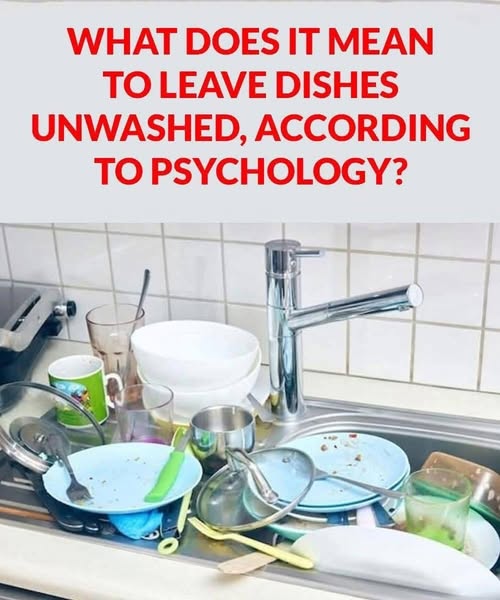
A sink full of dishes may seem like nothing more than an unfinished household task, yet in many households it symbolizes something much deeper. Dirty plates, piled-up cookware, and messy countertops are often not the result of laziness or neglect. Instead, they can reflect emotional exhaustion, stress, packed schedules, or mental fatigue that has gradually accumulated over time. When life feels overwhelming, even the smallest responsibilities can begin to appear far more difficult than they actually are.
In the beginning, people usually believe the mess is only temporary. A few dishes are left behind after a tiring day, but “later” slowly turns into tomorrow, and then the day after that. Eventually, the kitchen itself may start to create emotional tension. Every unwashed item becomes a constant reminder of tasks still unfinished. Studies and mental health professionals have frequently pointed out that cluttered spaces can heighten stress levels and make relaxation more difficult because the mind continues to process incomplete responsibilities in the background.
For many people, particularly those juggling careers, parenting, financial strain, or emotional difficulties, household mess often reflects mental overload rather than poor habits. Someone struggling with burnout may come home feeling completely drained. Others coping with anxiety, sadness, or emotional fatigue may avoid areas that trigger guilt or frustration. In these situations, the real burden is often not the dishes themselves, but the emotions connected to them.
At the same time, even small acts of tidying can bring meaningful emotional comfort. Washing a few plates, clearing part of a counter, or organizing a single space can restore a sense of control and calm during stressful times. The aim is not perfection, but creating manageable routines and practicing self-care through small steps. Consistent, simple habits can gradually ease emotional strain and foster a more peaceful environment. Sometimes healing does not begin with major transformations, but with quiet, steady actions that remind people they are still capable of caring for themselves and the spaces around them.