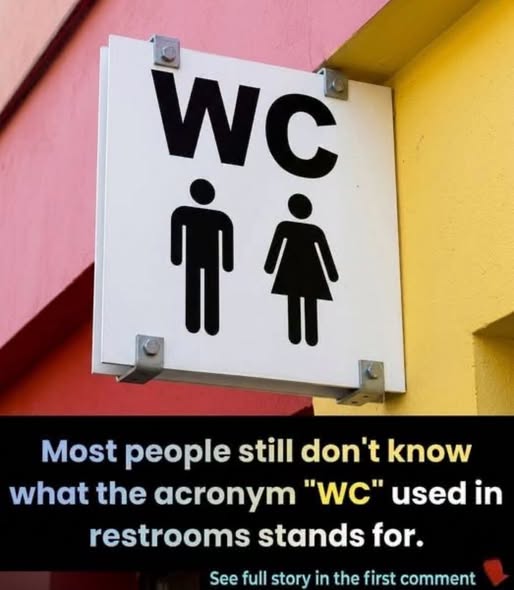
Traveling internationally highlights how daily vocabulary differs across cultures. What one nation calls a restroom might be referred to as a washroom, bathroom, or loo elsewhere. Despite these linguistic variations, the abbreviation “WC” is universally recognized on signs worldwide, though its historical roots remain a mystery to many modern travelers.
The acronym stands for “Water Closet,” a phrase originating in the 19th century alongside the rise of indoor plumbing. As flush toilets became a standard upgrade for indoor sanitation, they were typically installed in small, closet-sized rooms separate from the main bathing areas. Because these compact spaces housed a water-reliant toilet, the term naturally became part of everyday speech.
With urban growth and infrastructure development, “WC” signage quickly spread across hotels, train stations, and restaurants, providing a clear, multilingual indicator for public facilities. Even as spoken language shifted toward terms like “toilet” or “restroom,” the practical abbreviation persisted on signage throughout Europe and Asia, where it remains common today.
Ultimately, the enduring presence of the “WC” symbol serves as a quiet nod to the history of public sanitation and design. Spotting the sign is more than just finding a restroom; it is a brief reminder of how past technological innovations continue to subtly influence our modern, everyday lives.