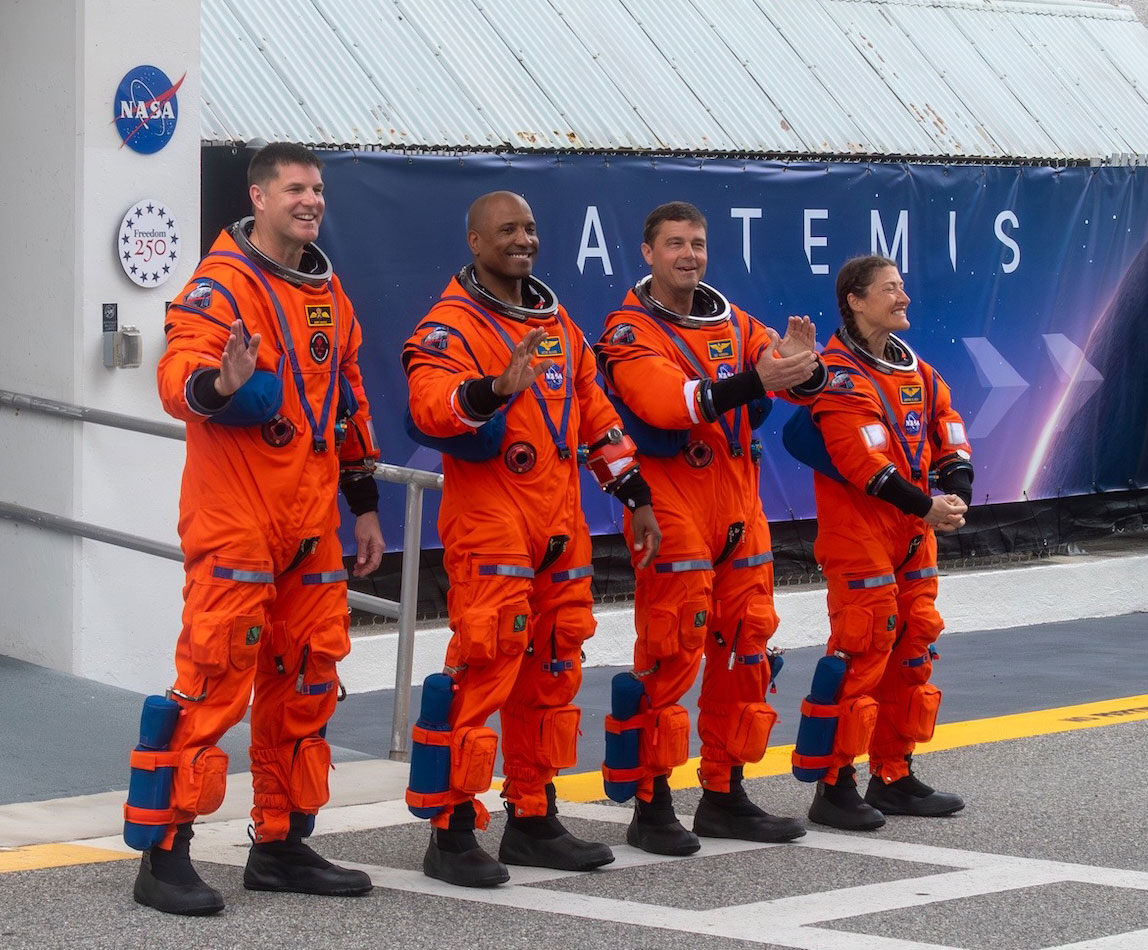
NASA’s Artemis II mission successfully launched on Wednesday evening, marking a historic milestone for human space exploration as astronauts journey farther from Earth than anyone in recent history. Aboard the Orion spacecraft, four crew members—NASA astronauts Reid Wiseman, Victor Glover, Christina Koch, and Canadian Space Agency astronaut Jeremy Hansen—embarked on a ten-day mission that will carry them around the Moon, though they will not be setting foot on its surface. This mission represents the furthest humans have traveled into space in decades and serves as a critical precursor to the Artemis III mission, which aims to return humans to the lunar surface. The launch itself was a stunning display of engineering prowess, with four RS-25 engines and twin solid rocket boosters propelling Orion into the Florida sky, arcing over the Atlantic Ocean, and gradually accelerating it into orbit. The magnitude of the achievement is a testament not only to modern aerospace engineering but also to decades of planning, testing, and international collaboration. From the moment the engines ignited to the spacecraft entering orbit, the launch encapsulated a blend of precision, power, and the audacious human spirit that has driven space exploration since the dawn of the space age.
Even with a successful lift-off, the realities of human spaceflight quickly made themselves apparent, underscoring the challenges astronauts face when leaving the protective environment of Earth. Shortly after takeoff, the crew reported a technical issue with Orion’s Universal Waste Management System, the sophisticated system responsible for collecting and containing human waste in microgravity. Initially, the crew indicated that “toilet is powered, waste tank merged,” but soon noticed an amber warning light signaling a fault with the fecal collection capability of the system. Though perhaps humorous to those on Earth, this issue highlighted the complexity of sustaining basic human functions in space, where even something as routine as using the toilet requires careful monitoring, engineering, and collaboration with Mission Control. Over radio communication, Artemis II mission specialist Christina Koch worked closely with ground teams to troubleshoot and implement a solution, restoring the system to full functionality. NASA spokespersons reassured the public that while the toilet’s warning light had been triggered, the crew could still safely use the system for both liquid and solid waste, and the fix ensured that health, hygiene, and comfort aboard the spacecraft were maintained.