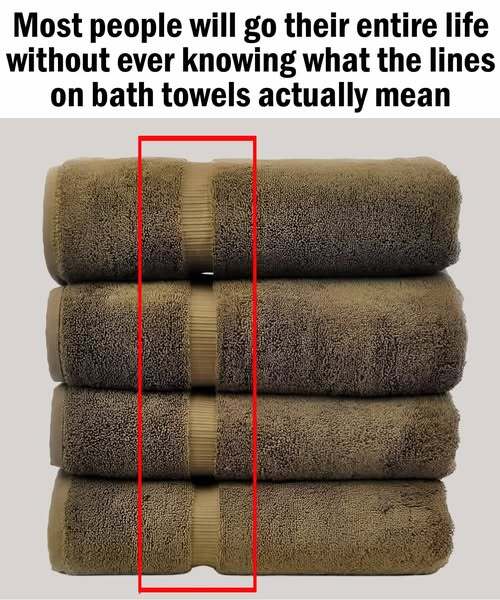
When you pick up a bath towel and look closely at its edges, you may notice a series of woven lines, ridges, or subtle patterns that run horizontally across the fabric. These details, often overlooked, might seem purely decorative at first glance, blending almost invisibly into the overall design of the towel. Yet, for those who pay attention, these lines carry a wealth of information about how the towel was made, how it performs, and how long it might last. Towels are not simple, uniform textiles; each component—from the plush terry loops in the center to the flat, patterned edges—represents deliberate design decisions made by manufacturers. Every ridge and weave communicates something about the towel’s durability, absorbency, and even tactile experience. For conscientious shoppers, noticing these details can transform the act of buying a towel from a simple transaction into an informed choice. These patterns are particularly important in certain settings, such as hotels, gyms, and spas, where towels must meet rigorous standards of durability and appearance. In homes, they can signal quality, inform washing practices, and even affect how towels feel during everyday use. Essentially, the lines on your bath towels embody the intersection of engineering, textile craftsmanship, and design, even though most people assume they exist purely for decoration. Recognizing their significance is the first step toward understanding the true complexity behind a seemingly mundane household item.
These lines are technically referred to as dobby borders, named after the dobby loom that creates them by controlling individual warp threads during weaving. While the central body of a towel is made from terry loops—small, uncut loops of yarn designed to maximize absorbency—the dobby border is woven flat, without loops, forming a denser, more stable edge. This construction has practical consequences: it reinforces the towel’s edges and prevents stretching, curling, or fraying over time. Terry cloth, by its nature, is soft, plush, and looped, making it prone to snagging or uneven wear, especially near the edges where the towel experiences the most friction. The dobby border counteracts these tendencies, distributing tension evenly and maintaining the towel’s overall shape, even after repeated washing and heavy use. The border also provides a clean, polished finish, giving the towel a more professional and carefully crafted appearance. High-quality towels often incorporate wider, more intricately woven dobby borders, while simpler, mass-produced towels may include narrow, plain edges. By observing the border, buyers can assess not only the towel’s immediate appearance but also its long-term durability. In many ways, the dobby border is a silent testament to the towel’s engineering, a subtle yet crucial feature that distinguishes well-made textiles from those designed for quick consumption and replacement.