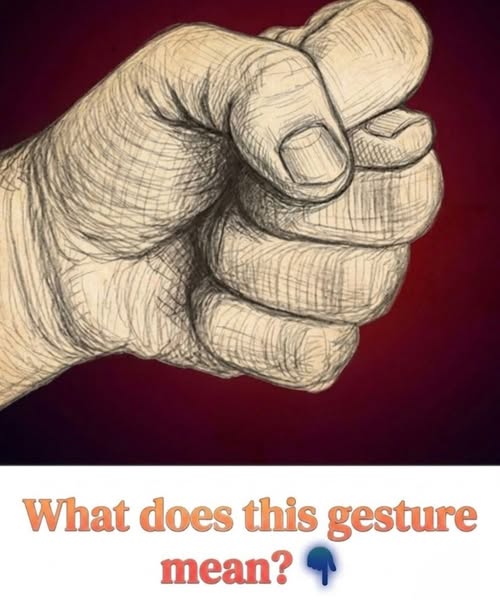
A clenched fist is one of the most powerful and widely recognized human gestures. Although it looks simple, it can carry very different meanings depending on the situation, culture, and context in which it is used.
One of the most common meanings of a raised fist is solidarity and unity. In social movements and protests, people often raise their fists to show that they stand together for a shared cause. It represents strength, resistance, and collective identity, sending a message that individuals are united rather than alone.
In other situations, a clenched fist can symbolize determination or personal strength. People may unconsciously clench their fists when they are focused, motivated, or preparing to overcome a challenge. In this sense, the gesture reflects inner resolve and emotional intensity.
A fist can also represent anger or frustration. When someone tightens their hand in response to stress or conflict, it may signal suppressed emotion or tension. Body language experts often interpret this version of the gesture as a sign that a person is trying to control strong feelings.
In sports and competition, a fist is frequently used as a sign of victory or encouragement. Athletes often clench their fists after scoring or winning a point, expressing excitement, confidence, and achievement. In this context, the gesture is positive and celebratory.
Culturally, meanings can vary. In some places, a fist raised in the air is a political symbol, while in others it may simply be a casual expression of encouragement or enthusiasm. The surrounding body language and facial expression are important in understanding its true intent.
Overall, a clenched fist is a versatile gesture that can express unity, strength, determination, anger, or victory. Its meaning is not fixed—it depends entirely on the situation and the emotions behind it.