There was a period in my life that I once believed I had successfully sealed away, a chapter I thought time itself had agreed to close without protest. I told myself that people were allowed to outgrow their mistakes, that distance was a form of resolution, and that becoming someone more responsible automatically absolved the person I had been. On the surface, this reasoning felt sensible. I had changed my habits, my priorities, even my language when I spoke about relationships and commitment. I believed that because I no longer made those choices, they no longer defined me. But the truth is that forgetting is not the same as understanding, and moving forward is not the same as making peace. I did not realize this until a simple envelope appeared at my door and asked me, quietly and without accusation, to look back without flinching.
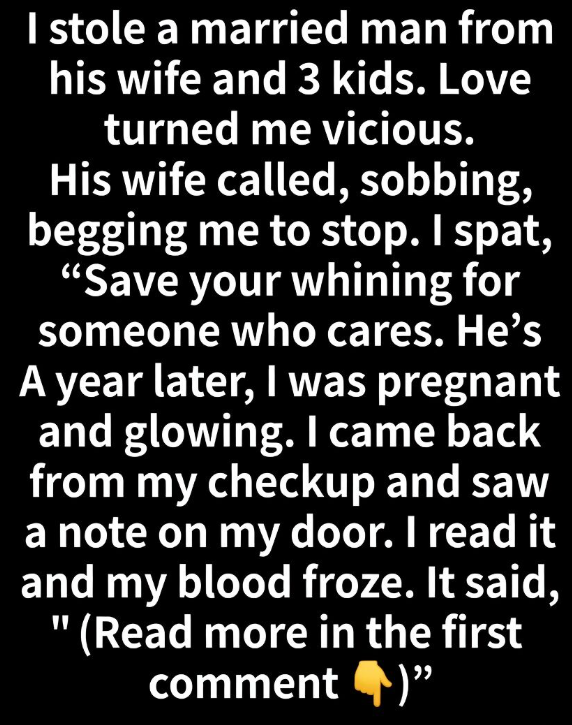
At one point in my life, I made choices I am not proud of. They were not impulsive in the way people often imagine; they were slow, deliberate decisions shaped by emotion rather than wisdom. I became involved with someone who was already committed to another life, another promise that existed before I ever entered the picture. I told myself the situation was complicated. I convinced myself that love was a justification rather than a responsibility. I framed the circumstances in ways that softened my role and emphasized my feelings. What I did not do was pause long enough to ask who would be hurt when the truth inevitably surfaced. I was not cruel, but I was selfish, and that distinction mattered less than I wanted it to.
When reality arrived, it did not come gently. It came through phone calls heavy with pain, conversations where words failed and silences spoke louder than anything said aloud. Boundaries were crossed that should have been respected from the beginning, and when confronted with the damage, I did not respond with humility. I defended myself. I explained. I justified. I focused on being understood instead of being accountable. At the time, I believed I was protecting myself. Looking back now, I see that I was protecting my self-image, not my integrity. I was afraid of fully acknowledging the harm because that acknowledgment would have required me to sit with discomfort I was not ready to face.
Time passed, as it always does, and life continued to move forward. A year later, my days looked different. I was focused on my health, my responsibilities, and the future I was building. I told myself that growth had occurred simply because my life no longer resembled the one I had lived before. I believed that maturity erased earlier versions of ourselves rather than building upon them. The past became something I referenced vaguely, without detail, something I assumed no longer had relevance. I was busy, productive, and outwardly stable, which made it easy to believe that everything unresolved had somehow resolved itself on its own.
Then one afternoon, after returning home from an unremarkabl appointment, I noticed an envelope resting against my door. It was not dramatic or urgent. There were no bold letters, no warning, no demand. Just my name, written carefully by hand. I stood there longer than necessary, keys still in my hand, because something in me recognized the weight of the moment before my mind could explain it. There was no fear exactly, but there was a quiet tension, the kind that arises when you sense that a door you thought was closed has been gently reopened.
The letter was not filled with anger. That was the first thing that disarmed me. There were no accusations, no attempts to shame or punish. Instead, the words were calm, measured, and deeply honest. They came from someone whose life had been affected by the choices we all made, someone who had every reason to speak harshly and chose not to. The letter spoke about accountability, not as a weapon, but as a reality. It described how actions ripple outward, how decisions made in private often touch people we never fully consider. It did not ask for an apology. It did not demand acknowledgment. It simply offered perspective.