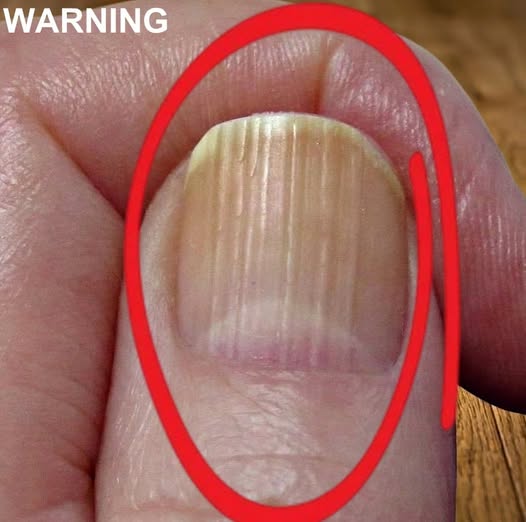
Fingernails are often treated as minor aesthetic details—trimmed neatly, painted in fashionable colors, or shaped to reflect personal style. Yet beneath their cosmetic role lies something far more significant. Nails are composed primarily of keratin, a structural protein that also forms hair and the outer layer of skin. Because they grow gradually and depend on steady blood supply and proper nutrition, their appearance can reflect internal health. Subtle shifts in color, thickness, texture, or shape may serve as early indicators that something within the body has changed. While many nail variations are harmless and temporary, others may warrant closer attention. Understanding what certain changes can mean allows individuals to recognize when it may be time to seek medical advice rather than dismiss the signs as superficial.
Healthy nails typically appear smooth, slightly curved, and light pink due to the rich network of tiny blood vessels beneath the nail bed. Growth occurs slowly—on average, fingernails grow about three millimeters per month—meaning visible changes can reflect health events that occurred weeks earlier. Because nails develop from cells at the base known as the matrix, disruptions to circulation, oxygen levels, or nutrient supply can influence their structure and color. For this reason, physicians sometimes examine nails during routine physical exams. They can offer clues about anemia, infections, heart or lung conditions, thyroid imbalances, or nutritional deficiencies. Although nail abnormalities alone rarely confirm a diagnosis, they may serve as valuable prompts for further evaluation.