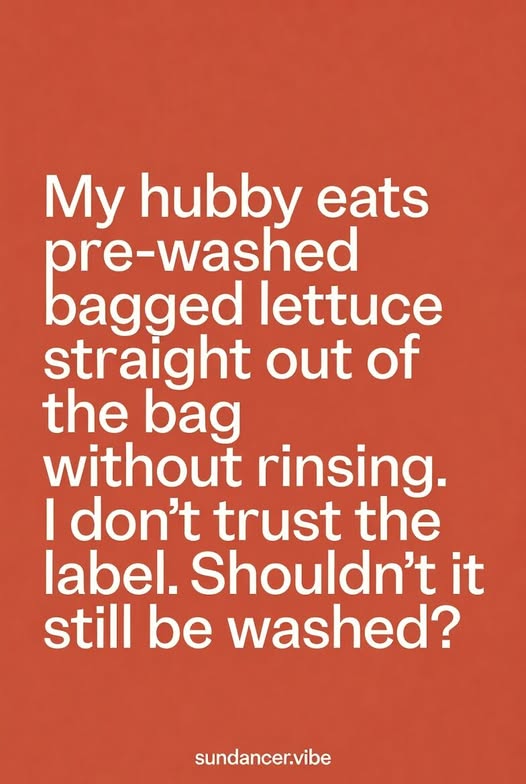
That “ready-to-eat” label on pre-washed lettuce often creates a quiet moment of doubt in many kitchens: do you trust it completely, or should you rinse it again just to be safe? The answer depends less on fear and more on understanding what actually happens before that salad mix reaches your fridge.In modern food production facilities, pre-washed lettuce goes through a highly controlled cleaning process. After being harvested, the leaves are transported quickly to processing plants where they are washed multiple times in cold, filtered water. These washes are carefully monitored and often include food-safe sanitizing agents designed to reduce harmful bacteria like E. coli and Salmonella. The water is continuously tested, equipment is sanitized regularly, and temperature control is maintained to slow bacterial growth and preserve freshness. By the time the lettuce is sealed in its bag, it has typically been cleaned under stricter conditions than what most home kitchens can replicate. That’s why it is labeled “ready-to-eat” or “triple washed”—it is intended to be safe without additional rinsing.
However, no food system is completely risk-free. Leafy greens are among the fresh foods most commonly associated with foodborne illness outbreaks because they are often eaten raw. Even though such outbreaks are relatively rare compared to the enormous volume of lettuce consumed worldwide, they tend to receive a lot of media attention, which naturally makes people more cautious. Regulatory agencies such as the FDA and CDC closely monitor these incidents and continuously update food safety standards to reduce risks in production and distribution.
This is where the question of rinsing at home comes in. Many people instinctively wash pre-washed lettuce again, thinking it adds an extra layer of protection. In reality, the benefit is limited. Once lettuce has been properly processed in a controlled facility, additional washing at home does not significantly reduce any remaining bacteria. In some cases, it can even introduce new risks if your sink, cutting board, or hands are not fully clean. Cross-contamination in the home kitchen is actually a more common cause of foodborne illness than properly processed packaged greens.
That said, rinsing isn’t necessarily harmful if done correctly—it just may not provide much extra safety. If you choose to wash it again, it should be done gently with clean hands and cold running water, without using soap or detergents, which are unsafe for food. The key is avoiding harsh handling or soaking that can damage the leaves and create spaces for bacteria to spread.
Beyond the science, there is also a psychological side to this habit. Food safety is not just about statistics—it’s about trust. Some people feel completely comfortable relying on industrial food systems, while others prefer to take an extra step for peace of mind. Neither reaction is wrong. Rinsing lettuce again can sometimes be more about reassurance than actual risk reduction. It gives a sense of control in a world where we don’t see everything that happens behind the scenes of food production.
Storage and handling at home also play a major role in safety. Keeping lettuce properly refrigerated, using clean utensils when serving, and consuming it before the expiration date are often more important than whether it was rinsed again. Once the bag is opened, exposure to air and handling becomes the bigger factor in maintaining freshness and reducing contamination risks.
So, should you wash pre-washed lettuce again? From a food safety standpoint, it is generally not necessary if the product is from a reliable source and properly stored. From a personal comfort standpoint, it is optional—more about how confident you feel than about significantly changing the level of safety. The real key is understanding that the system behind “ready-to-eat” greens is already designed to do most of the work for you.
In the end, the decision sits between science and habit: trust the process, or add a personal step for reassurance. But either way, the most important factor is not the extra rinse—it’s how the food is stored, handled, and consumed once it reaches your kitchen.