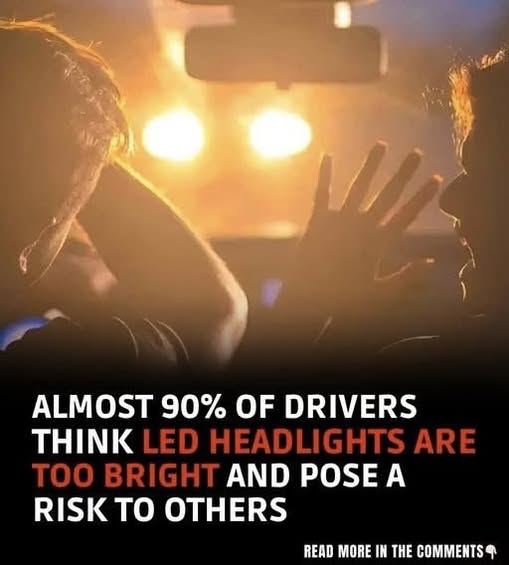
Modern vehicles are increasingly equipped with LED headlights due to their efficiency, long service life, and sharp illumination. Automakers often present them as a significant upgrade over traditional halogen systems, particularly for nighttime driving and durability. However, as LED lighting becomes more widespread, many drivers have started expressing concerns about glare and discomfort when driving at night, especially on busy roads or poorly lit streets.
A growing number of motorists report that the brightness of some LED headlights can feel intense when facing oncoming traffic. Unlike older halogen lights, which produced a warmer and softer glow, LED systems often emit a cooler, more focused beam that can appear harsher to the eye. In certain conditions such as rain, fog, or long night drives, this strong brightness may temporarily reduce visibility or cause eye strain. The issue can be more noticeable with larger vehicles like SUVs and trucks, where headlights are positioned higher above the road.
Safety specialists point out that the problem is not necessarily the LED technology itself, but rather issues like incorrect alignment, aftermarket modifications, or improperly adjusted beams. When headlights are aimed too high, they can shine directly into the eyes of oncoming drivers instead of illuminating the road surface. Because of these concerns, some road safety advocates have called for updated regulations, including better standards for beam direction, brightness limits, and regular inspections.
Even with these challenges, LED headlights still offer clear benefits such as lower energy use and improved visibility for the driver using them. The key focus moving forward is balancing technological progress with road safety and comfort. Proper installation, correct alignment, and routine maintenance can help reduce glare while maintaining the advantages of modern lighting systems. As automotive technology continues to evolve, future improvements are expected to prioritize not only brightness and efficiency, but also safer and more comfortable nighttime driving for everyone on the road.